Walk past any perfume counter and you'll see the same letters again and again: EDP, EDT, sometimes "extrait" or "parfum." They're not just marketing labels — they tell you something real about what's in the bottle and how long it'll last.
It's all about concentration
Every version of "perfume" is the same fragrance oil diluted to different strengths in alcohol and water. The percentage of that oil is what the letters refer to:
- Eau de Cologne (EDC) — roughly 2–4% fragrance oil. Light, brief, often citrus-led.
- Eau de Toilette (EDT) — roughly 5–15%. The most common designer strength; noticeable for 3–5 hours.
- Eau de Parfum (EDP) — roughly 15–20%. Stronger, deeper, and typically lasts 6–10 hours depending on the composition.
- Extrait de Parfum (Parfum) — roughly 20–40%, sometimes higher. The most concentrated, longest-lasting, and usually the most expensive to produce.
Higher concentration generally means the fragrance projects more, lasts longer, and uses more raw material per bottle — which is part of why EDPs and extraits cost more than EDTs of the same fragrance.
Why concentration changes how a fragrance smells
It's not just about strength. A higher concentration changes the balance of a composition — base notes get more room to develop, while an EDT version of the same fragrance can smell brighter and more top-note-led simply because there's less material to carry the deeper notes through. This is why an EDP and an EDT of the "same" perfume can smell noticeably different on skin, not just in intensity.
Why we only make EDPs
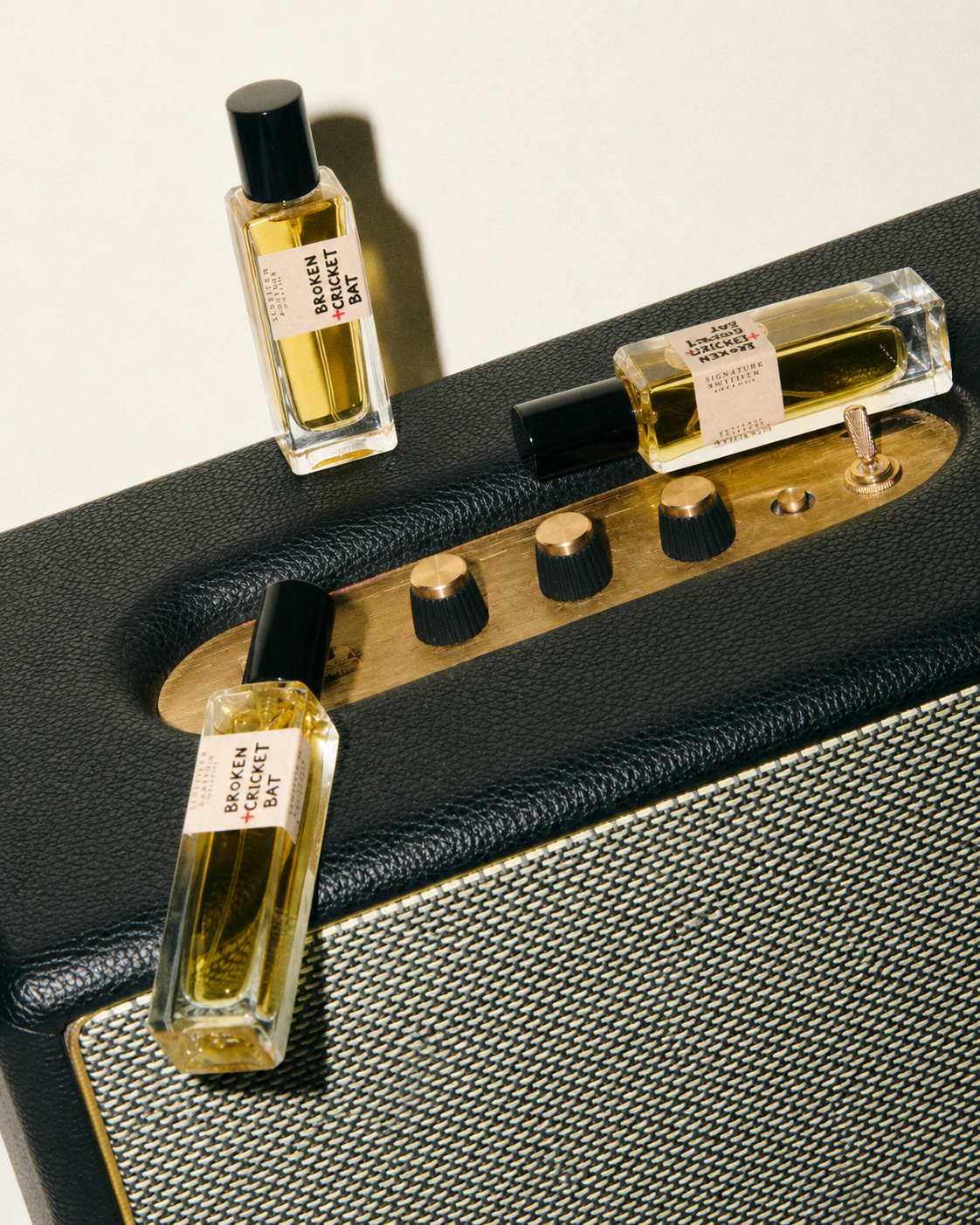
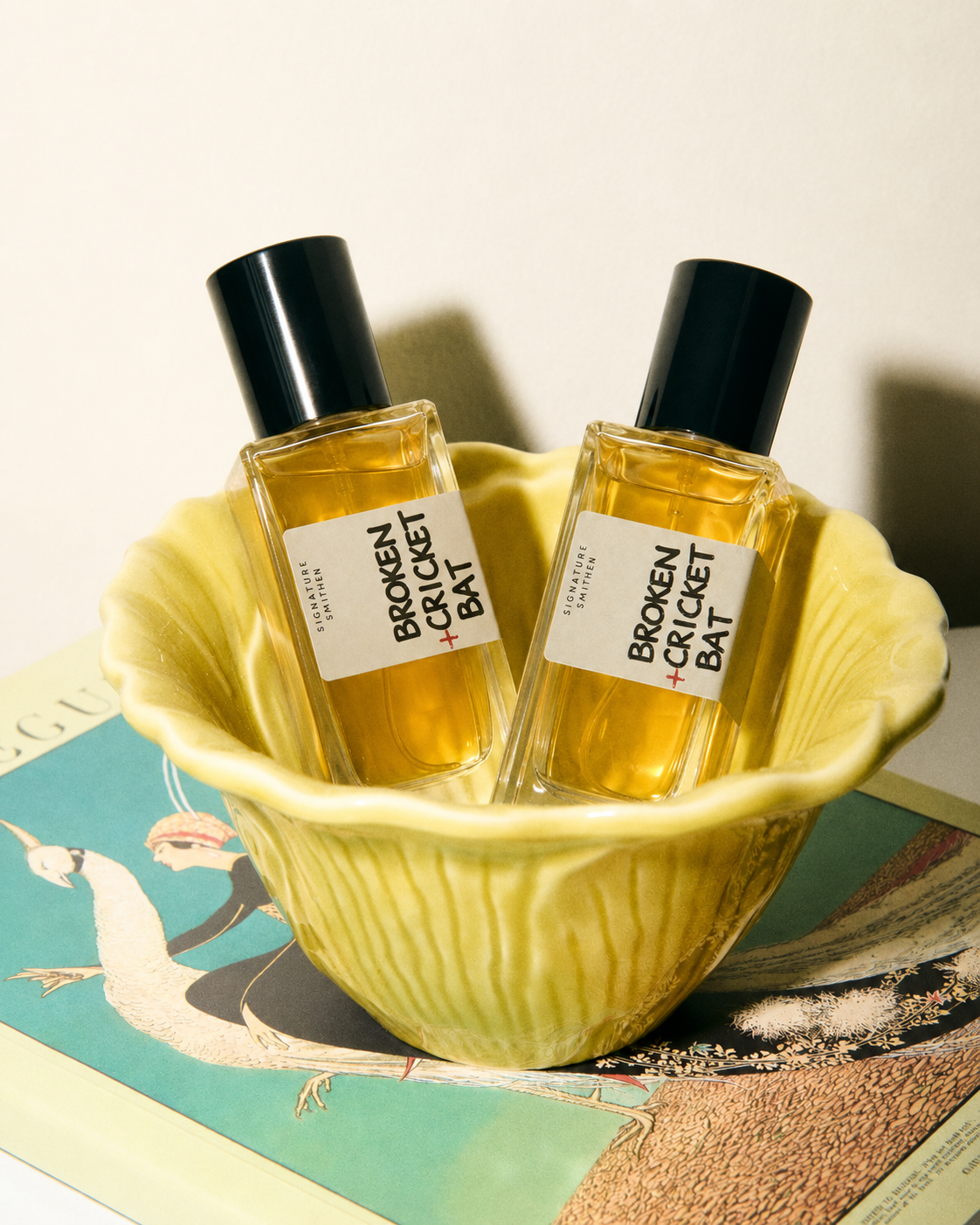
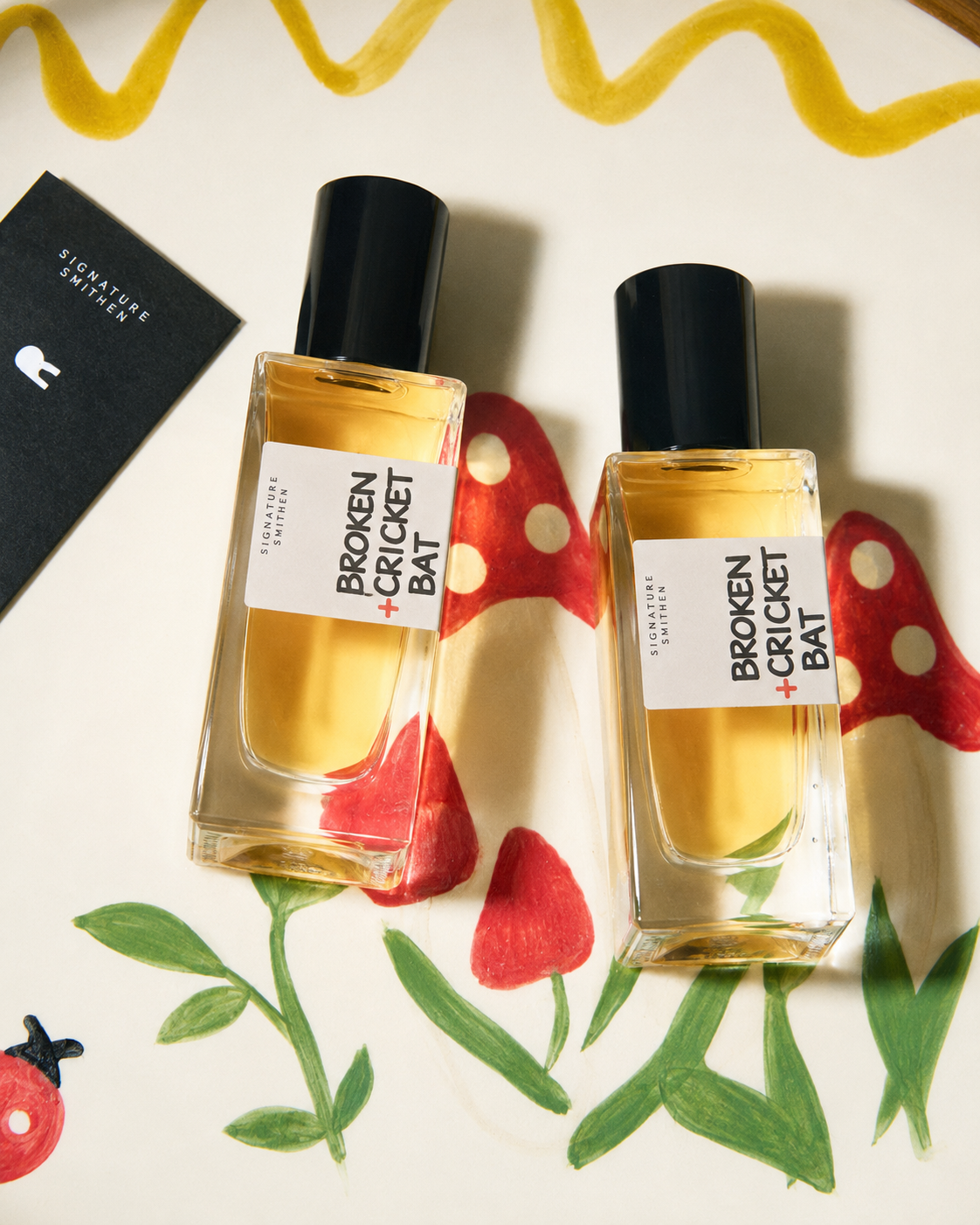
Both Broken Cricket Bat and Peppery Amber are Eau de Parfum concentration — deliberately. At 15–20% oil, EDP gives a composition enough depth to let base notes like sandalwood, oud, amber and vanilla actually develop properly over several hours, rather than fading before they've had the chance. For fragrances built around real depth in the base, EDT concentration would undersell the composition.
How to choose between them
- Want something light for daytime or the office? EDT or EDC strength suits subtler wear.
- Want a fragrance with real staying power, that develops properly over the day? EDP is the sweet spot for most people.
- Want maximum longevity and don't mind paying for it? Extrait de parfum is the most concentrated option, though it's less common and usually pricier.
If you're not sure how a particular EDP wears on your own skin, that's exactly what samples are for — try Broken Cricket Bat or Peppery Amber as a 1.5ml sample before committing to a full bottle.
Signature Smithen is an independent British fragrance house. Every fragrance we make is Eau de Parfum concentration.