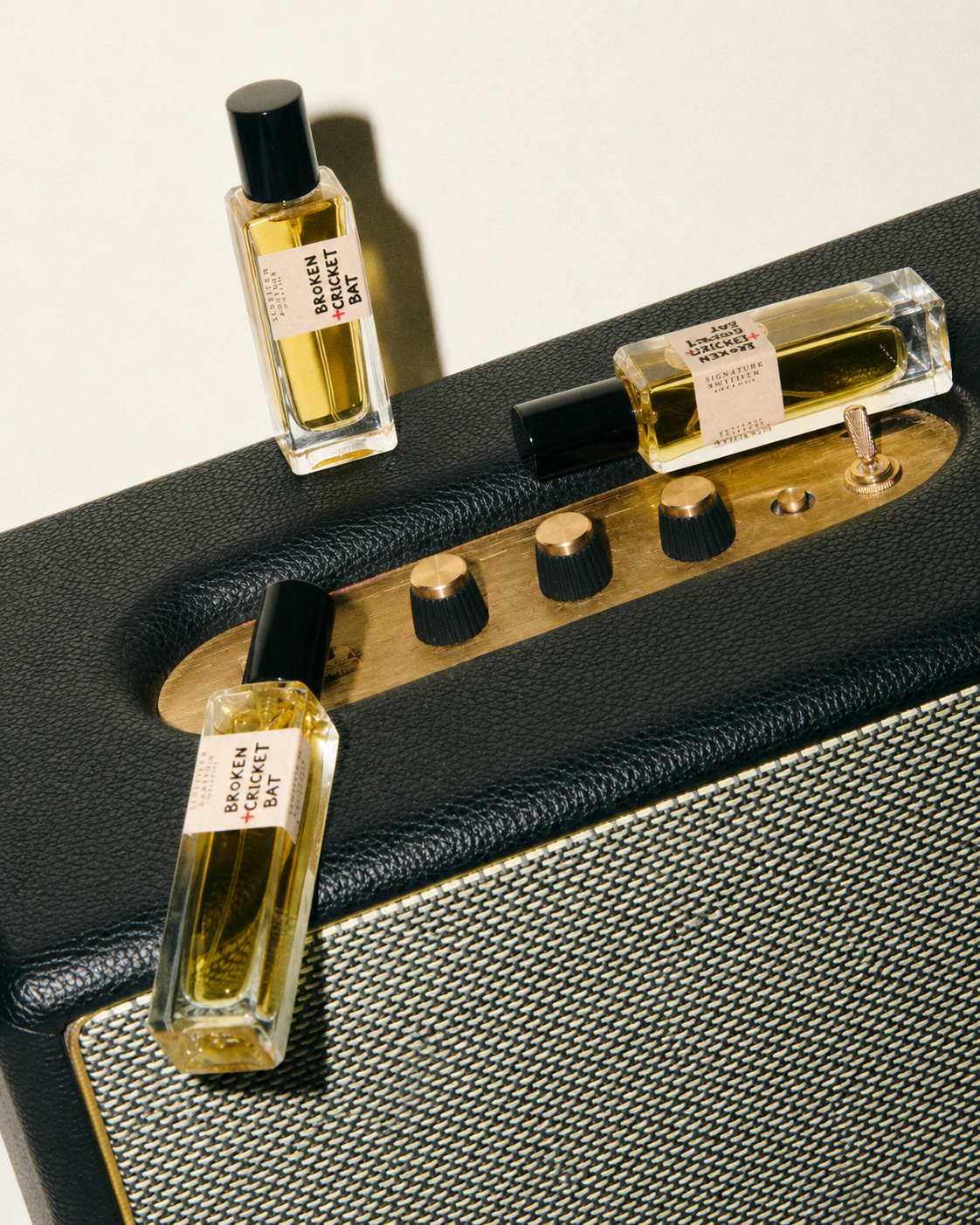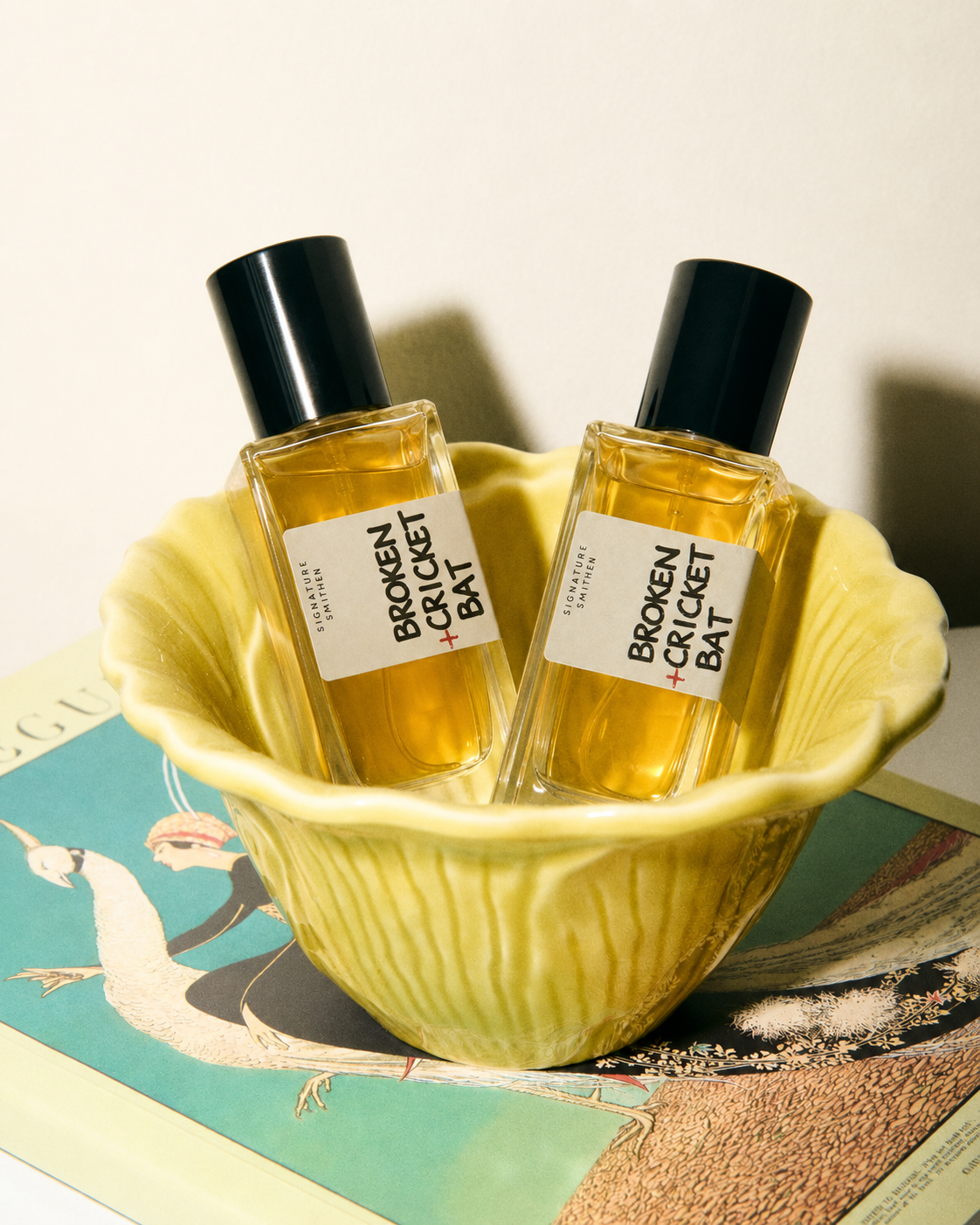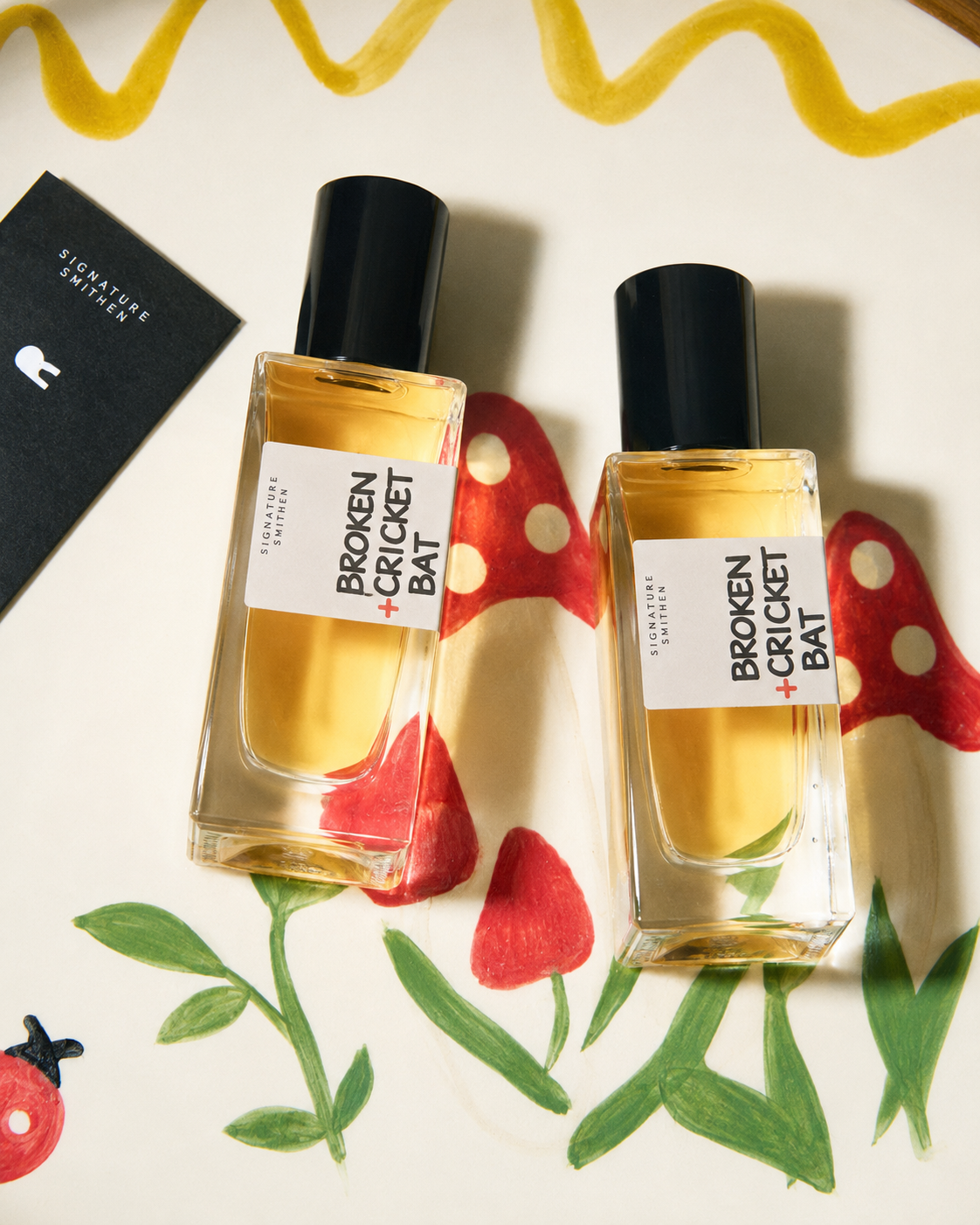
Sandalwood is one of the most recognisable base notes in perfumery — even if most people couldn't name it. It smells creamy, soft and faintly sweet: closer to warm skin than to anything sharp or resinous. It's the note that took niche fragrance mainstream when Le Labo's Santal 33 became a cult favourite, and it's the foundation of our own Broken Cricket Bat.
What does sandalwood smell like?
Sandalwood has a creamy, soft, faintly sweet character — closer to warm milk or skin than to anything sharp or resinous. It's one of the gentlest, most universally wearable base notes in perfumery, which is exactly why it turns up in everything from mainstream classics to niche compositions. When sandalwood leads a fragrance, expect something smooth and enveloping rather than bold or challenging.
Is sandalwood the same as oud?
No. Sandalwood and oud are different materials from different trees entirely. Sandalwood comes from sandalwood trees and has a soft, creamy, milky character, while oud (agarwood) comes from the resin certain agar trees produce when infected by a particular mould, and is sharper, smokier and more resinous. They get confused because they're constantly paired together in perfumery: sandalwood's smoothness is exactly what balances oud's intensity, which is why the two so often show up in the same sentence and the same bottle.

The Sandalwood Scent Profile
- Creamy and soft: closer to milk or warm skin than anything sharp or resinous
- Faintly sweet: without being sugary; more like warmth than sugar
- Woody, but gentle: nowhere near as sharp as cedarwood or as smoky as oud
- Long-lasting: sandalwood is a base note, often still present 8+ hours after application
On its own, real sandalwood oil (traditionally from Mysore, India, though much of what's used today is Australian or New Caledonian sandalwood) has a buttery, almost lactonic quality that's instantly recognisable once you know what to listen for.
Indian vs Australian sandalwood: does origin change the scent?
Not all sandalwood smells the same — where the tree grew changes the oil's character almost as much as the species does.
- Indian sandalwood (Santalum album): historically the gold standard, and still the benchmark most perfumers compare against. Oil from Mysore carries an intensely sweet, buttery, almost milky depth that's genuinely difficult to replicate synthetically.
- Australian sandalwood (Santalum spicatum): slightly earthier, sharper and greener than its Indian counterpart — less milky, but a robust, dependable woody base. It's also the variety most likely to come from regulated, sustainably managed plantations today.
Because genuine Indian sandalwood is now so scarce and tightly regulated, much of the fragrance industry has turned to Australian sourcing or to synthetic molecules like Javanol, which replicate sandalwood's creamy, rosy facets with far less pressure on wild trees — and with far more consistent longevity and projection from batch to batch.
Why sandalwood pairs so well with other notes
Part of why sandalwood shows up in so many compositions is how well it plays as a foundation. It rounds off sharper notes (oud, leather, pepper) without competing with them, which is why it's so often paired with oud specifically: oud brings the intensity, sandalwood brings the smoothing creaminess that makes the combination wearable. It shows up in the same supporting role alongside amber, too, softening resinous sweetness the same way it softens oud's smoke.
Sandalwood in Broken Cricket Bat
Our own Broken Cricket Bat uses sandalwood in exactly this role: as the smoothing base note underneath oud, patchouli and oakmoss:
- Top: Pink pepper, juniper berry, cardamom
- Heart: Blue cypress, clary sage, cedarwood
- Base: Oakmoss, patchouli, oud, sandalwood
By the time you reach the base, the sandalwood has already started its work of taking the intensity of the oud and oakmoss and giving it a smooth, wearable finish: 7–10 hours of longevity with moderate-to-bold sillage.
Why is sandalwood so expensive?
If you've priced up a bottle of genuine sandalwood oil or a sandalwood-led perfume, you'll have noticed it rarely comes cheap. That comes down to time, not marketing.
A sandalwood tree needs 15 to 30 years of growth before its heartwood develops enough oil to be worth distilling. And because the oil is most concentrated in the roots, the entire tree has to be uprooted to harvest it — there's no pruning a branch and moving on. That slow-growth, whole-tree economics is what drove sandalwood into serious scarcity through the late 20th century.
The industry has since course-corrected: reputable brands and fragrance houses now favour sustainably managed, government-regulated plantations — mostly in Australia — where new trees are planted for every one harvested.
How to spot real sandalwood oil
Sandalwood's price and popularity have made it a magnet for imitations. A few ways to tell genuine oil from a synthetic stand-in:
- Check the viscosity: pure sandalwood oil is thick and pale gold — it takes a moment to drip from the bottle. If it pours like water, it's diluted or synthetic.
- Watch how it evolves: synthetic imitations tend to smell strong immediately and fade within the hour. Real sandalwood does the opposite — it starts subtle and grows warmer and richer as it interacts with your skin over several hours.
- Read the label: genuine oil is labelled with the botanical name — Santalum album or Santalum spicatum. If a listing just says "sandalwood fragrance oil" with no botanical name, assume it's synthetic.
- Be sceptical of the price: a large bottle of "pure" sandalwood oil going for a few pounds is not pure sandalwood oil. Genuine oil is a real investment, full stop.
Layering sandalwood: a quick pairing guide
If you like building your own scent combinations, sandalwood is one of the most forgiving base notes to layer with:
- Florals — rose, jasmine and ylang-ylang bring out a rich, romantic, slightly exotic side of sandalwood.
- Spices — cardamom, black pepper and clove cut through its creaminess with a bit of heat.
- Citrus — bergamot and sweet orange lighten the density of the base, keeping the overall effect bright rather than heavy.
How to tell if you'll like a sandalwood fragrance
If you've ever liked a fragrance described as "creamy," "milky," or "smooth wood," there's a good chance sandalwood was doing the work. It's one of the most universally wearable base notes in perfumery, rarely polarising on its own, which is part of why it shows up in everything from mainstream hits to four-figure niche releases. If you're curious how ours compares to the fragrance that made sandalwood famous, see our Santal 33 alternatives guide.
Want to find out how it wears on you specifically? Try Broken Cricket Bat as a 1.5ml sample for £6 before committing to a full bottle. If you're new to this whole world, our guide to what niche perfume actually means is a good place to start.
FAQ
Is sandalwood perfume unisex?
Yes, generally. Sandalwood doesn't carry strong gendered marketing baggage the way some florals or powdery notes do, which is part of why it works equally well in traditionally "masculine" and "feminine" compositions.
Why is sandalwood so expensive?
Because it takes 15–30 years for a sandalwood tree to develop enough oil-rich heartwood to distil, and the tree has to be uprooted entirely to harvest it — there's no partial harvest. That slow, whole-tree economics is what keeps genuine sandalwood oil expensive.
How long does sandalwood perfume last?
As a base note, sandalwood is part of what's still on your skin late in the day. In Broken Cricket Bat specifically, it contributes to 7–10 hours of longevity with moderate-to-bold sillage.
Is sandalwood a good starting point for niche fragrance?
Yes — it's rarely polarising, which makes it one of the easier notes to build confidence with before moving on to sharper materials like oud or amber.
Signature Smithen is an independent British fragrance house. Broken Cricket Bat is our woody aromatic EDP, built around sandalwood, oud, cedarwood and oakmoss.